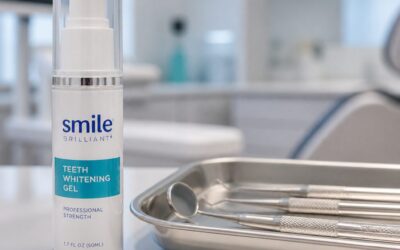
Hydrogen peroxide is the active ingredient in virtually all professional and commercial teeth whitening products. It’s also used as a mouthwash and a DIY oral health remedy. The difference between effective and harmful use comes down to concentration, contact time, and frequency.
How it works for whitening
Hydrogen peroxide oxidizes the organic chromogen molecules that cause tooth discoloration — chromogens that accumulate within enamel and dentin from foods, drinks, tobacco, and aging. The oxidation breaks the chemical bonds responsible for their color, lightening the appearance of the tooth from within the mineral structure. This is categorically different from mechanical stain removal through abrasion. Peroxide penetrates the enamel and acts on discoloration within the tooth structure itself — this is why it produces results that abrasive products can’t match.
| Concentration | Where used | Risk level |
|---|---|---|
| 1.5-3% (pharmacy H₂O₂) | OTC mouthwash, DIY rinse | Low at correct dilution and brief use |
| 3.5-10% (OTC whitening strips) | Commercial whitening products | Low-moderate, mainly sensitivity |
| 10-22% (professional trays) | Take-home professional kits | Moderate — dentist supervision recommended |
| 25-40% (in-office) | Professional in-office treatment | Requires professional application and gum protection |
The DIY diluted mouthwash question
Diluting drugstore 3% hydrogen peroxide (typically 1:1 with water to make 1.5%) and using it as a mouthwash is a common DIY practice. At this concentration, used briefly (30-60 seconds) and not daily for extended periods, the risk is low. Concerns with undiluted 3% or higher used as rinses: oxidative stress to soft tissue cells, potential gum irritation, and microbiome disruption — the antibacterial properties that make it useful can kill beneficial oral bacteria indiscriminately. Daily use of any antiseptic over months disrupts the oral microbiome in ways that may not be favorable.
The bottom line
Hydrogen peroxide in the concentrations and applications described for whitening is safe. The concern about peroxide causing oral cancer is not supported by clinical evidence — the concentrations in whitening products don’t reach tissue in ways that cause mutagenic effects. The risks are primarily enamel sensitivity (temporary) and, at high concentrations without proper technique, soft tissue irritation. For oral health beyond whitening — particularly gum health and microbiome support — hydrogen peroxide doesn’t address the underlying bacterial imbalance. Our dental supplement guide and supplement comparison cover evidence-based options for those goals.
Educational content. Consult your dentist before starting whitening treatment, especially at higher concentrations.